
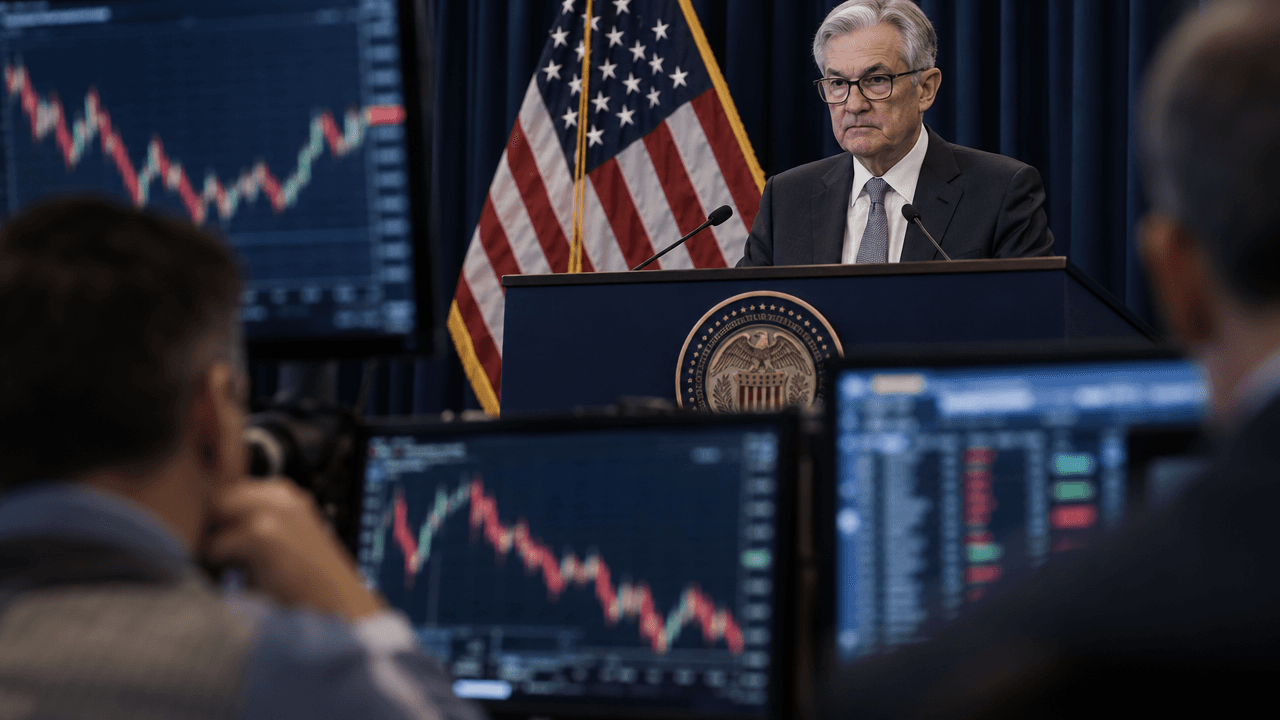
The Federal Reserve’s October 28 decision is the central event for financial markets this week, but the interest-rate announcement itself may not be the most important development. Investors largely expect policymakers to leave the federal funds target range unchanged at 3.75% to 4.00%, following a quarter-point increase in September. The bigger market catalyst will be the accompanying statement and press conference, where traders will look for clues about whether another hike is likely before the end of the year. [1][4]
Why This Fed Meeting Matters
A central-bank decision can move several markets simultaneously because interest rates influence borrowing costs, bond valuations, currency demand, equity multiples, and expectations for economic growth. Even when the Fed delivers an outcome that markets have already anticipated, a change in its language can produce sharp price movements.
For this meeting, the headline scenario is a pause. Fed funds futures have assigned less than a 10% probability to an October hike, while markets have placed considerably higher odds on a quarter-point increase in December. Some estimates put the probability of at least one additional hike before year-end near 75% to 80%. [1][3]
That creates an important distinction for traders. A rate hold could be described as dovish if officials suggest that policy is already restrictive enough. However, the same rate hold could be interpreted as hawkish if policymakers emphasize persistent inflation, strong economic activity, or the need for further tightening.
The Press Conference May Drive The Biggest Move
The Federal Open Market Committee is scheduled to release its decision and statement at 2:00 p.m. Eastern Time, followed by the press conference at 2:30 p.m. The statement provides the official policy language, while the press conference gives markets an opportunity to assess the chair’s tone and responses to questions. [2][6]
Traders will focus on several signals. First, they will examine whether the Fed continues to describe inflation as elevated or shows greater confidence that price pressures are easing. Second, they will listen for comments about the labor market and consumer demand. Third, they will assess whether officials view December as a probable policy move or merely one possibility among several.
The difference between “further increases may be appropriate” and “the committee will carefully assess incoming data” can be significant. The first phrase would reinforce expectations for a hike and potentially support the dollar and short-term yields. The second could encourage traders to reduce their expectations for additional tightening, which may benefit rate-sensitive equities and longer-duration assets.
Bonds, The Dollar, And Equities
Treasury yields were already higher ahead of the meeting, with the two-year yield around 4.73%, the 10-year yield near 4.99%, and the 30-year yield close to 5.30% in recent trading. [6] The two-year Treasury is particularly sensitive to anticipated Fed policy, so it may react quickly to changes in expectations for December and 2027.
A hawkish message would generally place upward pressure on short-term yields. Higher yields can support the dollar by making U.S. assets more attractive to global investors, although currency markets can also react unpredictably if a hawkish message has already been priced in.
Equity markets face a more complicated reaction. Higher rates increase the discount rate applied to future corporate earnings, which can pressure growth and technology stocks. Financial companies may respond differently because interest rates affect lending margins and credit conditions. If the Fed sounds less aggressive than expected, equities could rally as investors price in lower future borrowing costs.
The first move may not be the final move. A market can initially rise on a rate hold, then reverse during the press conference if officials signal that the pause is temporary. This is why traders should evaluate the entire communication package rather than reacting to the first headline.
Practical Takeaways For Traders
The most useful approach is to define scenarios before the announcement. A clear hold combined with a hawkish press conference could lift the dollar and Treasury yields while weighing on equity futures. A hold paired with a dovish message could push yields lower and support stocks. A surprise hike would likely produce the strongest immediate volatility because it would challenge the market’s dominant expectation.
Position sizing is especially important during scheduled events. Bid-ask spreads can widen, liquidity can thin, and stop orders may execute at prices materially different from their triggers. Traders using simulated finance platforms can use the event to practice scenario planning without exposing real capital.
One practical exercise is to record the market’s price before the announcement, identify the expected outcome, and then compare the initial reaction with the move 30 minutes later. This helps distinguish a genuine repricing from a temporary headline spike.
Conclusion
The October Fed decision matters less because of the expected rate hold than because of what it communicates about the path ahead. With markets already pricing a meaningful chance of a December hike, even small changes in the Fed’s language could influence Treasury yields, the dollar, equities, and rate futures.
For traders, the key lesson is to focus on expectations, not just outcomes. A decision that appears uneventful on the surface can still become highly market-moving when the press conference changes the outlook for future policy. Careful preparation, controlled risk, and attention to the full statement-and-press-conference sequence are more valuable than trying to predict every short-term price move.