
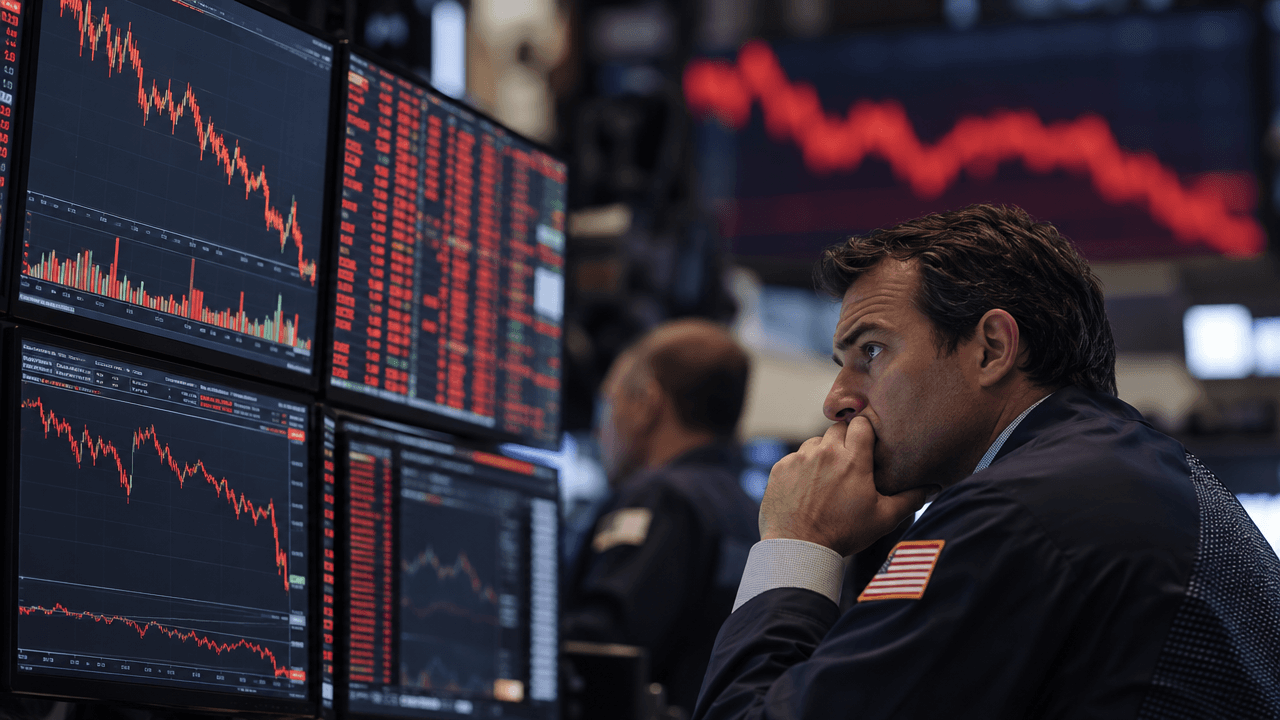
Us Equities Enter Correction Territory Amid Technology Sell-off
US equities have entered a more volatile phase as investors reassess the strength of technology and artificial intelligence stocks. The Nasdaq Composite dropped 2.49% to 24,509.76, while the S&P 500 fell 1.92% to 7,416.59 and the Dow Jones Industrial Average declined 1.41% to 51,608.17. [1] The sharp losses pushed the Nasdaq more than 10% below its October 6 record close, meeting the standard definition of a market correction. [2]
The move is important not simply because of the size of one day’s declines, but because technology shares have been the primary engine of market performance. When leadership stocks weaken, investors often reassess valuations, earnings expectations and portfolio risk across the broader market.
What A Correction Means For Investors
A market correction is generally defined as a decline of at least 10% from a recent peak. It is more serious than an ordinary daily pullback, but it is not the same as a bear market, which is commonly associated with a decline of 20% or more.
Corrections can occur for many reasons, including excessive valuations, changing interest-rate expectations, disappointing corporate results or a shift in investor sentiment. They do not automatically signal that the economy is entering a recession. Instead, corrections often represent a repricing of risk after a prolonged advance.
For traders, the distinction matters. A correction can create opportunities, but it also tends to produce wider intraday ranges, faster reversals and less reliable momentum signals. Strategies that performed well during a steady uptrend may struggle when correlations rise and several sectors decline together.
Why Technology Is Leading The Decline
Technology stocks have carried elevated expectations tied to artificial intelligence, data-center investment and semiconductor demand. Those expectations can support strong prices when earnings growth confirms the optimism. However, highly valued companies are also more sensitive to disappointing guidance, higher interest rates and changes in risk appetite.
The latest sell-off was led by technology and semiconductor shares, with Nvidia identified as a major contributor to the market’s weakness. [2] Investors were also reducing exposure ahead of Nvidia’s quarterly earnings report and the anticipated initial public offering of artificial intelligence company Anthropic. [3]
These events have increased the market’s focus on whether artificial intelligence spending is translating into sustainable revenue and profits. The key question is no longer simply whether AI adoption will grow. Investors are also asking how quickly returns will appear, which companies will capture the greatest share of the value and whether current valuations already reflect years of future growth.
When A Tech Sell-off Becomes A Broader Risk Event
The performance of the three major indexes shows that the selling was not isolated to a narrow group of technology stocks. The Dow’s 739-point decline and the S&P 500’s nearly 2% drop indicate that defensive positioning spread beyond the Nasdaq. [2]
Technology companies have a large influence on major benchmarks, particularly the Nasdaq and S&P 500. As a result, declines in a small number of mega-cap stocks can affect index performance even when other industries remain relatively stable. At the same time, investors who experience losses in growth stocks may sell profitable holdings in other sectors to raise cash or reduce overall exposure.
That process can reinforce a risk-off environment. Equity futures may weaken, volatility can increase and investors may favor cash, high-quality bonds or defensive industries. The feedback loop is especially powerful when market participants are using leverage or systematic strategies that reduce positions after volatility rises.
Practical Lessons For Traders
First, position size matters more during a correction. A trade that seems manageable during calm conditions can become difficult when prices move several percentage points in a single session. Reducing exposure is not a prediction that markets will continue falling; it is a way to preserve flexibility.
Second, traders should distinguish between index weakness and individual-stock weakness. A company with strong earnings, manageable debt and reasonable valuation may behave differently from a speculative stock whose price depends primarily on future growth assumptions.
Third, avoid treating every bounce as confirmation that the correction is over. Relief rallies are common after sharp declines, particularly when short sellers take profits. Confirmation may require improving breadth, stabilizing semiconductor shares and evidence that sellers are no longer dominating consecutive sessions.
Finally, define risk before entering a position. Traders can use predetermined stop levels, smaller allocations or scenario planning to avoid making emotional decisions during fast markets. In a simulated finance environment, this is an ideal opportunity to test how a strategy performs under different volatility and drawdown assumptions without placing real capital at risk.
What To Watch Next
The next phase will depend on earnings, interest rates and market breadth. Nvidia’s results may influence sentiment across chips, cloud infrastructure and other AI-related companies. Investors will also examine whether corporate guidance supports continued capital expenditure or suggests that customers are becoming more cautious.
Beyond individual earnings reports, traders should monitor the percentage of stocks trading above key moving averages, the behavior of small-cap companies and whether defensive sectors begin outperforming. A correction that remains concentrated in expensive growth shares may be healthier than a decline that expands aggressively across the entire market.
The Nasdaq’s entry into correction territory is a warning that market leadership is being questioned, not proof that a prolonged collapse is inevitable. For investors and SimFi traders, the most valuable response is disciplined observation: reassess assumptions, control exposure and wait for evidence before increasing risk. Markets eventually reward preparation more consistently than prediction.