
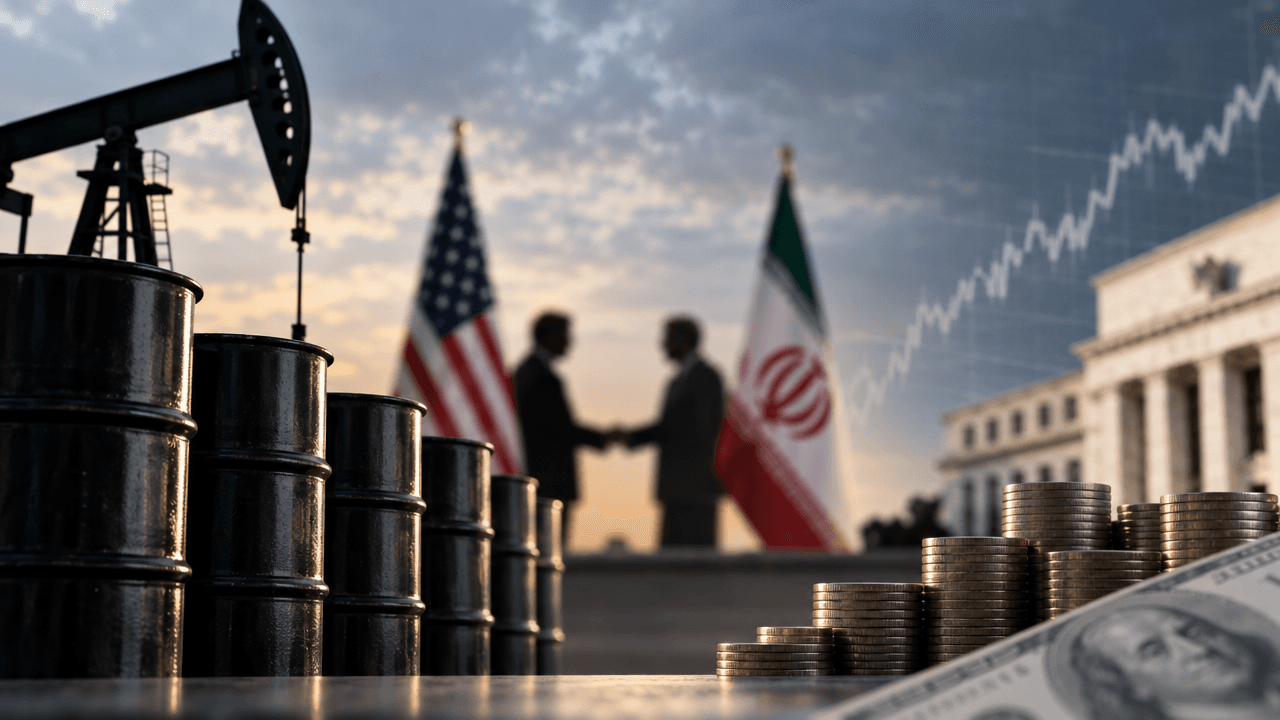
Oil prices eased in Asian trading on Thursday as reports of renewed U.S.–Iran diplomacy encouraged traders to reduce some of the geopolitical premium built into crude markets. West Texas Intermediate slipped below $102 a barrel, while Brent held near $115 after a sharp October rally. The move was modest, but it showed how quickly energy markets can respond when the risk of further conflict appears to lessen. [7]
The reported outreach came from U.S. Vice President JD Vance, who contacted Mohsen Rezaei, a senior Iranian official and former commander of the Islamic Revolutionary Guard Corps, in an effort to revive peace negotiations. The communication reportedly occurred at President Donald Trump’s direction, even as Washington has warned that military action could resume after the U.S. midterm elections. [1]
For oil traders, the development does not remove the threat of disruption. It simply introduces another possible outcome: diplomacy may eventually reduce pressure on shipping routes, energy infrastructure, and regional supply flows.
Diplomacy Changes The Risk Premium
Crude prices often reflect more than current production and consumption. They also include a risk premium—the extra amount traders are willing to pay because future supply may be disrupted.
That premium expanded during October as markets assessed the possibility of renewed U.S. strikes against Iran and continuing threats to shipping in the Gulf. Brent climbed from roughly $90 a barrel at the end of August to around $109 by October 19, according to economic estimates, while other market reports placed the contract above $115 during the latest rally. [3]
Diplomatic outreach can reduce that premium even before a formal agreement is reached. If investors believe negotiations could prevent escalation, they may become less willing to hold long crude positions based solely on worst-case scenarios. The result can be a quick decline in futures prices, particularly after a strong rally.
However, the market’s reaction remains conditional. Reports indicate that the initial contacts have focused on creating a framework for negotiations rather than delivering a completed peace proposal. Until talks produce measurable results, traders are likely to treat diplomacy as a possibility rather than a confirmed change in supply conditions. [15]
Why The Strait Of Hormuz Matters
The Middle East remains central to the oil outlook because the region contains critical export infrastructure and some of the world’s most important maritime routes. Any threat to tankers, ports, pipelines, or the Strait of Hormuz can affect prices well beyond the countries directly involved.
The Strait is particularly important because a prolonged disruption would limit the movement of crude and refined products between the Persian Gulf and global markets. Even without an actual closure, higher insurance costs, rerouted tankers, and delayed shipments can tighten available supply and encourage buyers to secure barrels in advance.
That is why traders monitor diplomatic headlines alongside inventory data, production estimates, and shipping activity. A successful negotiating channel could eventually reduce the threat to maritime traffic and lower the supply premium. A breakdown in talks, by contrast, could quickly restore fears of escalation.
The recent market pattern illustrates this two-way risk. Oil rose strongly on concerns that conflict could intensify, then pulled back when reports suggested a diplomatic opening. This does not necessarily indicate a lasting bearish trend. It reflects a market attempting to price several possible futures at once.
Inflation And Central-bank Pressure
The oil decline is also important for investors because energy prices have become a major influence on inflation expectations. Higher crude prices raise transportation and production costs, while gasoline, diesel, heating fuel, and petrochemical products can pass those costs through to households and businesses.
Recent energy gains have already complicated the outlook for monetary policy. Analysts have warned that higher oil prices could keep inflation elevated and encourage central banks to maintain a hawkish stance. Some market participants have even increased expectations for interest-rate increases later in the year. [4]
A sustained decline in crude would offer central banks some relief. Lower energy costs could slow headline inflation and reduce pressure on policymakers to respond aggressively. That might support bonds, interest-sensitive equities, and currencies in economies that are heavily dependent on imported energy.
The opposite is also true. If diplomatic efforts fail and crude returns to recent highs, inflation expectations could rise again. Central banks would then face a difficult balance: economic growth may weaken under the burden of expensive energy, but delaying action could allow inflation to become more persistent.
What Traders Should Watch Next
The next phase of the oil market will depend less on a single headline and more on whether diplomacy produces concrete progress. Traders should monitor official statements from Washington and Tehran, evidence of direct negotiations, and any changes in regional military activity.
Shipping conditions will be equally important. A diplomatic message may lower prices temporarily, but a sustained improvement in tanker traffic and insurance conditions would provide stronger evidence that the physical supply risk is declining.
Market participants should also track Brent’s reaction around recent support and resistance levels, the spread between front-month and later futures contracts, and inventory data from major consuming economies. If near-term prices remain elevated while inventories fall, the market may still be signaling tight supply despite diplomatic optimism.
For SimFi traders, this is a useful example of why risk management matters during headline-driven markets. Position size should reflect the possibility of sudden price gaps, while stop-loss orders and predefined loss limits can help prevent one geopolitical update from overwhelming an account. Traders should also avoid assuming that the first market reaction will continue. Oil can rally on escalation fears, fall on diplomatic reports, and reverse again when new information appears.
Diplomacy Offers Relief, Not Certainty
Oil’s decline following reports of renewed U.S.–Iran diplomacy shows how strongly geopolitical expectations are shaping energy markets. The immediate reaction suggests that traders see a credible negotiating channel as a potential path toward lower supply risk, but the market has not yet received proof of a lasting resolution.
For now, crude remains highly sensitive to every development involving Iran, regional shipping, and U.S. policy. A successful diplomatic process could unwind part of oil’s geopolitical premium and ease inflation pressure. A collapse in talks could produce the opposite result just as quickly.
The broader lesson is that oil prices are being driven by both physical fundamentals and political probabilities. Traders who monitor both—and manage exposure accordingly—will be better prepared for the sharp swings likely to define the market in the weeks ahead.