
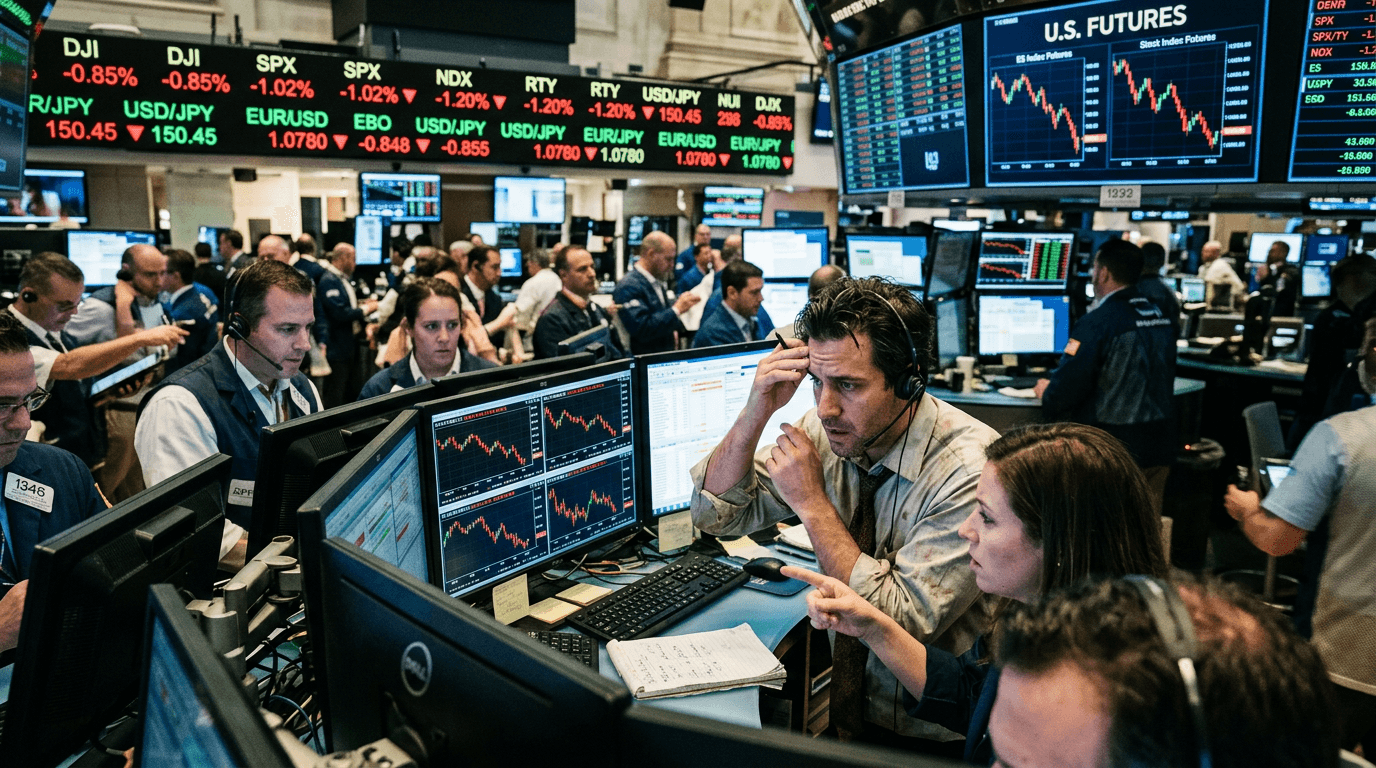
U.S. stock index futures are drifting lower as traders position cautiously ahead of the next Personal Consumption Expenditures (PCE) inflation report, the Federal Reserve’s preferred gauge of price pressures.[2][3] With expectations for rate cuts still finely balanced and the dollar searching for direction, this single data point could set the tone not just for equity futures, but also for Treasuries, FX, and broader risk sentiment.[2][8]
The setup is classic “event risk”: markets are quiet on the surface, but positioning under the hood is shifting as traders decide whether to hedge, fade, or embrace the potential volatility that follows the release.
Why Pce Matters So Much
PCE, or Personal Consumption Expenditures price index, tracks how much prices are rising for the goods and services households actually consume.[3][5] It is published monthly by the Bureau of Economic Analysis (BEA) as part of the Personal Income and Outlays report.[3][5] That makes it a high-frequency, high-impact read on inflation trends.
Within the report, traders focus on two key measures:
- Headline PCE: Inflation for all consumer spending categories combined.[5]
- Core PCE: PCE excluding food and energy, which tend to be more volatile.[2][6]
Core PCE is especially important because the Federal Reserve uses it as its primary gauge of underlying inflation and to assess progress toward its 2% target.[2] Recent data show core PCE running above that goal, with year-over-year readings still in the low- to mid-3% range, reinforcing the idea that inflation is easing only gradually.[2]
Because PCE directly feeds into the Fed’s assessment of inflation and real household spending, it influences:
- Expectations for the timing, pace, and size of any future rate cuts or hikes
- The full Treasury yield curve, from short-dated bills to long bonds
- The U.S. dollar, via interest-rate differentials and global capital flows
- Risk assets such as equities, credit, and FX, which react to both growth and discount-rate assumptions[2][8]
In short, PCE is not just “another inflation number.” It’s the one the Fed watches most closely—and so do markets.
How The Next Pce Print Could Move Markets
The BEA’s PCE release is a scheduled event, and traders know exactly when it will hit the tape.[5][6] That predictability does not reduce its impact; it just concentrates volatility into a small window around the announcement. Depending on whether the data come in hotter, cooler, or roughly in line with forecasts, the reaction across assets can differ sharply.
Here is a simplified scenario framework many traders use:
1. Hotter-than-expected PCE (inflation surprise to the upside) • Rates: Yields move higher as traders price out some rate-cut odds or revive the risk of further tightening.[2][8] • Dollar: Often strengthens as higher expected U.S. rates attract capital. • Equities: Futures typically come under pressure, especially rate-sensitive growth and tech names, as higher discount rates bite into valuations. • FX and commodities: Risk-sensitive currencies (e.g., some EM FX, high-beta FX) and gold can weaken as real yields rise.
2. Cooler-than-expected PCE (inflation surprise to the downside) • Rates: Yields tend to fall as the market leans toward earlier or more aggressive cuts. • Dollar: Can weaken, particularly against higher-yielding or pro-cyclical currencies. • Equities: Futures generally bounce, with cyclical and growth sectors benefiting from a friendlier policy path. • Risk assets: Credit, high-beta FX, and equity indices often catch a bid as financial conditions appear more supportive.
3. In-line PCE (no major surprise) • Rates: Yields may move only modestly, with focus shifting back to the Fed’s forward guidance and other data. • Dollar and equities: The initial reaction can be muted, but markets may still drift as traders express relative-value views within sectors, styles, or regions. • Volatility: Implied volatility priced into options may compress if traders were positioned for a big surprise that did not materialize.
Today’s softer U.S. equity futures reflect that investors are not willing to aggressively add risk just ahead of this binary-style event. The risk-reward profile is asymmetric: a big upside surprise in inflation could do more damage to risk assets than a modest downside surprise might help, especially if positioning has already leaned optimistic on disinflation and rate cuts.
Implications For Rates, The Dollar, And Global Risk Sentiment
For interest-rate markets, PCE is a direct input into the debate over “how restrictive” policy still is. If core PCE remains sticky well above 2%, the Fed has less room to cut without risking another inflation flare-up.[2] That keeps real yields elevated and financial conditions tighter, a headwind for richly valued parts of the equity market.
For the U.S. dollar, PCE shapes interest-rate differentials versus other major economies. A stubbornly high PCE path could keep U.S. rates higher for longer relative to peers, supporting the dollar. A faster disinflation path, by contrast, could narrow those differentials and weigh on the currency as traders reposition into markets with relatively more attractive yields or growth prospects.
Because the dollar, Treasuries, and U.S. equities are core benchmarks for global portfolios, the PCE print often sets the tone for:
- Global equity indices and futures in Europe and Asia
- Emerging-market assets, which tend to be sensitive to dollar strength and U.S. yields
- Cross-asset correlations, as inflation surprises can re-anchor the relationship between stocks, bonds, and FX
That is why a single data release can ripple through everything from S&P 500 futures to AUD/USD and EM equity ETFs within minutes of the headline.
Trading Playbook: Navigating Pce Event Risk
Whether you trade in live markets or use simulated finance environments to build your playbook, PCE days are ideal for practicing structured event-driven strategies.
A few practical considerations
• Know the consensus and the range Understanding the market’s expected core and headline PCE readings—and the high/low of economist forecasts—helps you gauge whether the eventual print is truly a surprise or just noise around the median.
• Watch the entire report, not just the headline Markets react to details like services vs goods inflation, and sometimes to measures such as median or trimmed-mean PCE tracked by regional Fed banks, which filter out extreme price moves.[4][9] That nuance can drive second-wave moves after the initial knee-jerk reaction.
• Prepare “if-then” scenarios in advance Before the release, map out: – If PCE is 0.2 percentage points above consensus, what is your plan for index futures, major FX pairs, or rate-sensitive sectors? – If it’s below, where are your levels to take profit, cut risk, or fade overreactions?
• Manage execution and risk Liquidity can thin and spreads can widen around the release. Traders often: – Reduce position sizes ahead of the number – Use limit orders instead of aggressive market orders – Set stop levels wider to avoid being shaken out by short-lived volatility spikes
• Use simulated trading to test strategies For developing traders, a SimFi environment allows you to rehearse PCE scenarios, build a data-release playbook, and observe how correlations behave—without the capital risk. The goal is to transform what looks like a binary risk event into a repeatable process.
Key Takeaways For Traders
U.S. stock futures softening ahead of the PCE report is a signal that markets recognize this as a pivotal data point for the Fed’s reaction function, rate expectations, and the dollar’s next leg. Under the surface, traders are actively adjusting exposures, hedging, and positioning around different inflation scenarios.
For active traders, the edge often lies less in predicting the exact PCE number and more in:
- Understanding why it matters to the Fed
- Anticipating how different outcomes translate into rate and FX moves
- Having a disciplined, pre-defined plan for execution and risk
As long as inflation remains above the Fed’s 2% target and the path back is uncertain, PCE will remain one of the most market-sensitive releases on the calendar. Learning to navigate it effectively is an essential skill for anyone trading U.S. indices, dollar crosses, or global risk assets—whether in live markets or in a simulated environment designed to mirror real-world dynamics.