
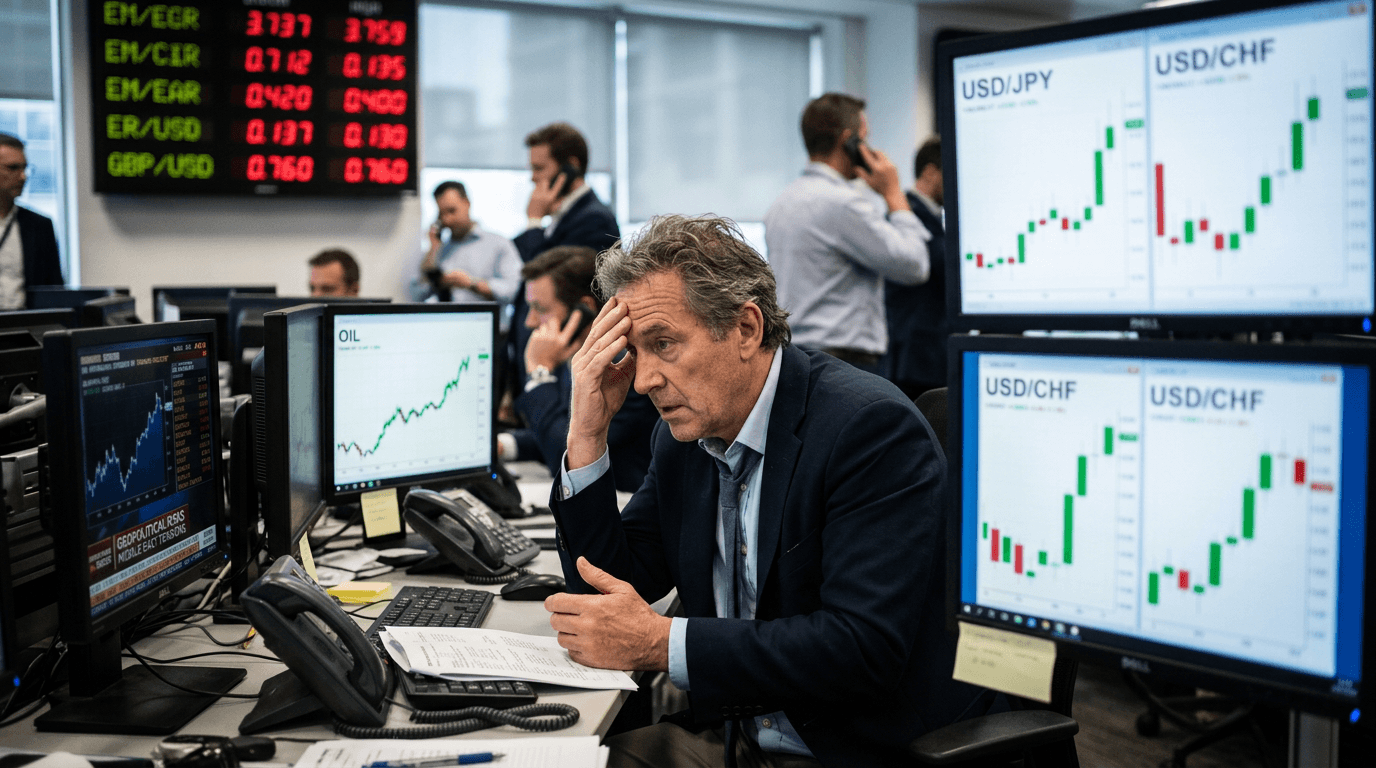
Safe-haven currencies have surged back into focus as the Iran conflict escalates, driving a powerful “risk-off” wave through global markets.[1][9] Investors are flocking to the U.S. dollar, Japanese yen and Swiss franc, pushing the dollar to its steepest weekly gain in over a year and lifting the yen despite ongoing concerns about Japan’s low-rate environment.[1][2] At the same time, war-related oil spikes and renewed inflation fears are pressuring sterling and a range of emerging-market currencies.[2][4]
Safe-haven Flows Take Center Stage
When geopolitical risk flares, currency markets often become a real-time barometer of global anxiety, and the current Iran conflict is no exception.[1][9] Reports of strikes and widening tensions across the Middle East have triggered rapid reallocations out of higher-yielding, risk-sensitive currencies and into those perceived as more stable and liquid.[1][2] The U.S. dollar index has posted its strongest weekly advance in more than a year as investors seek the familiarity and depth of dollar-denominated assets.[1][4]
The Japanese yen and Swiss franc have joined the dollar in this safe-haven rally, reflecting their longstanding status as “crisis currencies.”[1][2][4] The yen, in particular, has benefited not only from defensive flows but also from verbal intervention by Japanese officials, who have signaled discomfort with excessive FX volatility and yen weakness.[2] This combination of market-driven demand and policy signalling has helped put a floor under the currency at a moment of heightened geopolitical stress.[2]
Why Geopolitical Shocks Lift Dollar And Yen
Safe-haven flows are, at their core, about perceived safety, liquidity and policy predictability. The U.S. dollar is backed by the world’s largest and deepest capital markets, making it the natural destination when investors need to de-risk quickly.[7][9] Every time a major Middle East conflict erupts, global funds routinely pivot into dollar cash, U.S. Treasuries, and dollar money-market instruments as a first line of defense.[9] The current war has followed this pattern, with dollar demand rebounding sharply after a volatile period in which its safe-haven status was actively debated.[6][8]
The yen’s appeal is slightly different. Japan’s low interest rates mean the yen is often used as a funding currency for carry trades; during crises, those trades are unwound, forcing investors to buy back yen and reinforcing its safe-haven profile.[2] The Swiss franc adds a third pillar, drawing on Switzerland’s reputation for political neutrality and financial stability, and has historically appreciated against the dollar in most major conflicts.[5] However, history also shows that the dollar does not always strengthen in wartime, and safe havens can diverge depending on the nature and duration of the shock.[5] For traders, that means understanding not just “what” rallies, but “why” and under which conditions.
Oil, Inflation And Cross-asset Volatility
The Middle East remains central to global energy supply, so any conflict there immediately raises questions about oil disruption.[2][4] Markets are already pricing in significant risk premia, with Brent crude reportedly trading sharply higher in over-the-counter markets following U.S. and Israeli strikes on Iran.[2] A jump in oil feeds directly into inflation expectations, particularly in energy-importing economies, which in turn complicates central banks’ policy paths and injects more volatility into FX and rate futures.[2][4]
This inflation scare is one reason sterling and several emerging-market currencies are under pressure.[2][4] Higher oil prices worsen trade balances for energy importers, raise recession risks, and reduce the attractiveness of currencies tied to fragile growth stories.[2][4] Equity index futures and commodity markets have also seen increased intraday swings as investors attempt to reassess earnings, margins and policy trajectories under a higher-for-longer energy scenario.[2] For simulated traders, this environment offers abundant opportunity—but only for those who respect that correlations can shift quickly when oil and inflation expectations become the dominant macro drivers.
Winners, Losers And Fx Relative Performance
In this conflict-driven risk-off phase, a clear hierarchy has emerged across FX. On the “winner” side sit the U.S. dollar, yen and Swiss franc, all benefiting from safe-haven flows and, in the yen’s case, from official jawboning.[1][2][4] Gold has also attracted renewed interest, consistent with its historical role as a crisis hedge, although its performance can occasionally diverge from currencies depending on broader risk sentiment.[5]
On the “loser” side, sterling and various emerging-market currencies have come under sustained pressure, reflecting concerns about growth, external balances and sensitivity to higher energy costs.[2][4] Risk-sensitive commodity currencies such as the Australian and New Zealand dollars have also faced selling as investors pare back exposure to cyclical stories.[1][3] Yet it is important to emphasize that safe havens do not move in lockstep: the dollar, franc, yen and gold can each respond differently depending on whether investors prioritize liquidity, neutrality, yield or long-term store-of-value characteristics.[5]
Practical Takeaways For Simulated Fx Traders
For traders operating on SimFi platforms, this episode offers a live case study in how geopolitics, commodities and FX interact. First, escalating conflict tends to compress risk appetite rapidly, making position sizing and leverage decisions critical. Safe-haven rallies can be sharp but also prone to reversals if diplomatic headlines change, so simulated traders should practice dynamic risk management—using stop-losses, scenario analysis and diversified exposure rather than concentrated bets.
Second, understanding the fundamental drivers behind each safe-haven currency helps avoid simplistic assumptions. The dollar’s strength is tied to liquidity and global reserve status; the yen’s moves often reflect carry trade unwinds and Japanese policy signals; the franc’s demand stems from perceived neutrality and a long track record of stability.[2][5][7] Simulating strategies that differentiate between these narratives—rather than lumping all havens together—can improve both learning outcomes and future real-money discipline.
Third, cross-asset awareness is essential. Monitoring oil futures, headline inflation indicators and central-bank commentary can provide early clues about how FX pairs might react.[2][4] For example, simulated trades that link long-dollar positions with short energy-sensitive currencies, or that hedge yen exposure against equity futures, can help traders explore multi-asset correlations under stress. Historical data show that no single asset is a perfect hedge in every conflict, reinforcing the value of diversified “crisis playbooks” that combine currencies, commodities and indices.[5]
Finally, this environment underscores why psychological discipline matters as much as macro knowledge. News flow around war is inherently emotional, but markets translate that emotion into prices via liquidity, risk constraints and institutional behavior. Practicing decisions in a simulated environment allows traders to build a framework for reacting to fast-moving geopolitical events—anchored in probabilities, not headlines alone. As the Iran conflict and broader Middle East tensions continue to shape safe-haven demand, the most prepared traders will be those who treat this period as a chance to refine their process, not just chase volatile moves.