
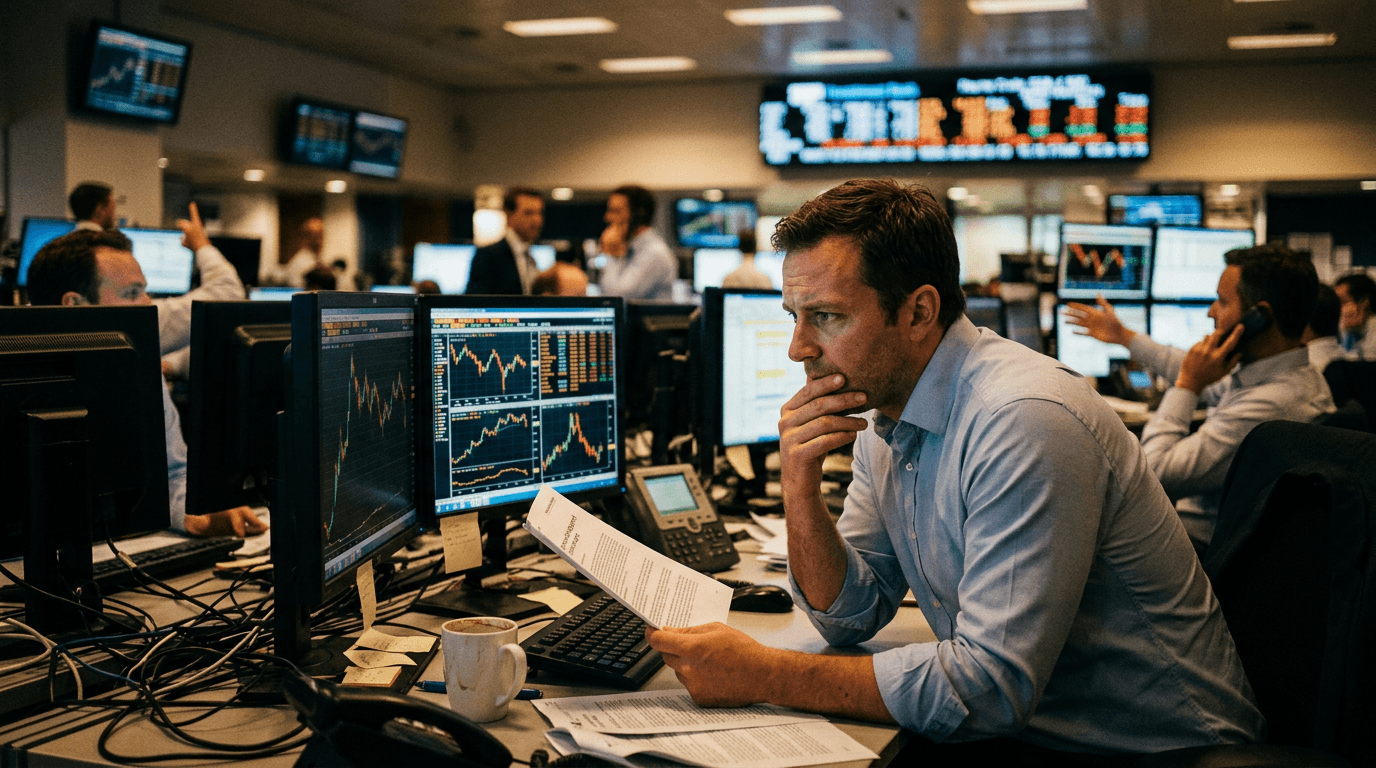
Oil markets have swung violently on the latest war headlines out of Iran, with crude spiking as much as 9% before retracing roughly 2% as attention shifted back toward supply fundamentals and potential cease‑fire scenarios.[2][8] That intraday whiplash has jolted commodity futures and spilled directly into equity index futures, inflation expectations, and cross‑asset risk sentiment.[7][10][13] For traders, this is a live case study in how geopolitics can re‑price risk in hours rather than months.[5][14]
What Just Happened In Oil
The immediate catalyst has been an escalation in the Iran conflict and fears around flows through key shipping lanes that handle a large share of global seaborne crude.[2][7][8] When markets perceive a real risk that barrels cannot reach consumers, a geopolitical risk premium gets priced into oil almost instantly.[5][13][14]
In this episode, U.S. crude briefly broke above recent trading ranges on war headlines, with moves amplified by short covering, algorithmic flows, and thin liquidity around the news spikes.[2][8][11] As headlines shifted toward possible cease‑fire efforts and more clarity on actual supply disruptions, prices pulled back, though they remain elevated relative to pre‑conflict levels.[7][8][10]
The crucial point for traders: the first move is often about fear and optionality, not about a carefully modeled supply‑demand balance.[5][10][13] Once the dust settles, markets quickly re‑anchor to fundamentals such as OPEC+ output, inventory data, refinery runs, and demand indicators.[3][10]
Key takeaway: In war‑driven oil shocks, the early phase is dominated by uncertainty and risk premia; the later phase is about measuring what truly changed in barrels and demand.
How Oil Shocks Flow Through Futures Markets
Commodity futures react along several dimensions simultaneously: price level, curve shape, volatility, and liquidity.[3][6][12] In a sudden supply scare, nearby contracts usually rise faster than longer‑dated ones, flattening or inverting the curve as buyers pay up for immediate delivery risk.[3][5] Implied volatility in crude options often jumps, widening bid‑ask spreads and increasing margin requirements just as traders are trying to adjust positions.[11][12]
These moves rarely stay confined to energy. Higher oil prices feed directly into inflation expectations, especially when they push gasoline and transport costs higher for consumers and businesses.[7][10][13] Bond markets may start pricing a higher path for policy rates or a slower pace of future cuts, putting upward pressure on yields and tightening financial conditions.[10][13]
At the same time, safe‑haven assets such as U.S. Treasuries, the U.S. dollar, and sometimes gold tend to attract flows, while more fragile emerging‑market currencies and assets come under pressure.[7][8][10] Countries that import most of their energy can see their trade balances and inflation outlook deteriorate quickly when oil spikes, undermining confidence in their equity and bond markets.[7][10]
Key takeaway: A geopolitical oil shock is not just an “energy story” — it can re‑price inflation, interest rates, and cross‑border capital flows across the entire futures complex.
Equity Index Futures Under Pressure
Equity index futures digest the oil move through several channels at once: earnings, margins, multiples, and risk appetite.[8][10][13] Higher energy costs act like a tax on consumers and many corporations, squeezing profit margins in energy‑intensive sectors such as airlines, transport, manufacturing, and some retailers.[7][10]
If markets conclude that higher oil will persist, analysts may cut earnings estimates, particularly for cyclicals and small‑caps with less pricing power.[10][13] At the same time, higher inflation expectations and bond yields reduce the present value of future cash flows, pressuring valuation multiples, especially for longer‑duration growth stocks.[10][13][14]
The result is often a sell‑off in broad equity index futures, even as energy sector names and related baskets outperform.[8][13][14] In recent trading, major U.S. and European equity indices have seen bouts of weakness and intraday swings linked directly to oil headlines, while some mega‑cap technology names and defensive sectors have served as relative havens.[8][10][13][14] Emerging‑market equity and FX futures have tended to fare worse, reflecting both higher imported energy costs and heightened risk aversion.[7][8][10]
Key takeaway: When oil is the driver, index-level moves can mask violent sector and regional rotations; understanding those rotations is critical for futures traders.
PRACTICAL PLAYBOOK FOR TRADERS (AND WHY TO PRACTICE IN SIMULATED MARKETS)
Volatility episodes like this are where process matters more than prediction. Rather than trying to guess the next headline, traders can focus on robust frameworks:
- Map scenarios: Outline best‑, base‑, and worst‑case paths for the conflict, ranging from quick de‑escalation to prolonged disruption, and estimate rough impacts on oil, inflation, and equity risk premia.
- Watch the curves: Track not just front‑month crude, but the entire futures curve and implied volatility term structure for clues on whether the market is pricing a temporary shock or a longer‑term regime shift.[3][5][11]
- Manage correlation risk: Historical relationships between oil, equities, bonds, and FX can break down during geopolitical events, so risk models based on calm periods may understate tail risk.[6][10][14]
- Use options thoughtfully: Options on crude, equity indices, and even volatility indices can express views on tail risks or hedge gap risk, but higher implied volatility means hedges are more expensive and sizing must be disciplined.[11][12]
Simulated finance platforms such as E8 Markets allow traders to practice this playbook in real time, using live‑like data and risk parameters without putting capital at immediate risk. This environment is particularly valuable for stress‑testing position sizing, margin management, and intraday decision‑making around news‑driven spikes.
Key takeaway: Focus on scenarios, structure, and risk limits rather than headline‑chasing, and use simulation to refine the process before committing real capital.
What To Watch Next
Going forward, markets will be guided by a tug‑of‑war between geopolitics and fundamentals. On the geopolitical side, any credible progress toward a cease‑fire or de‑escalation could quickly compress the war risk premium in oil.[5][7][8] Conversely, new attacks on infrastructure or shipping lanes could trigger fresh spikes and renewed stress in related futures.
On the fundamental side, traders will be monitoring inventory data, OPEC+ policy signals, and high‑frequency indicators of global demand to judge whether the latest shock has materially altered the medium‑term balance.[3][5][10] Inflation data, central bank communications, and moves in long‑term yields will help determine how much of the oil shock ultimately feeds into policy and growth expectations.[10][13][14]
For equity index futures, the focus will remain on earnings revisions, sector leadership, and whether volatility in energy and rates translates into a broader de‑risking or remains contained to specific pockets of the market.[8][10][13]
Conclusion
The recent war‑driven surge and pullback in oil prices is a reminder that futures markets are a web of interconnected expectations, not isolated silos. A single geopolitical shock can ripple from crude to inflation swaps, from bond yields to equity valuations, and from emerging‑market funding conditions to safe‑haven flows in a matter of days.[5][7][10][13]
For traders, the edge lies less in predicting every headline and more in understanding these transmission channels, sizing risk appropriately, and staying flexible as new information arrives. Using simulated environments like E8 Markets to rehearse that discipline can turn volatile episodes from existential threats into structured opportunities to apply a robust, repeatable trading process.