
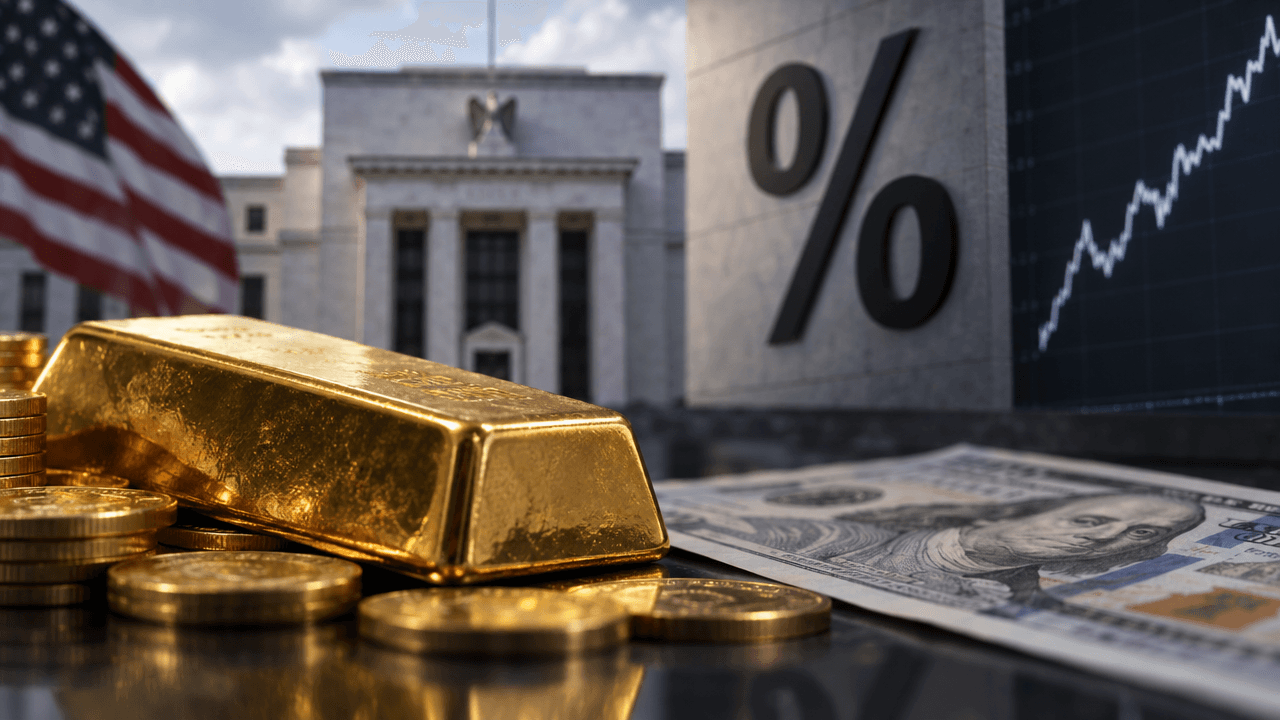
Gold’s latest retreat is a reminder that even a long-term safe-haven asset can face sustained pressure when monetary policy, bond yields, and currency markets move in the same direction. Spot gold was trading below $3,900 per ounce on November 17, near its lowest level since October 2025, after briefly falling toward $3,830 in the prior session. A stronger US dollar and rising expectations for another Federal Reserve rate increase have combined to reduce demand for bullion. [1][2]
For traders, the key issue is not simply that gold has declined. It is that the market’s underlying opportunity-cost calculation has changed. When inflation-adjusted interest rates rise, holding an asset that pays no interest becomes less attractive relative to cash, Treasury bills, and other yield-bearing investments.
Why Real Rates Matter For Gold
Real interest rates represent nominal interest rates after adjusting for inflation. If a two-year Treasury yield rises while inflation expectations remain stable or decline, the inflation-adjusted return available from government debt increases. That can encourage investors to reduce exposure to gold, particularly when the metal has already enjoyed a significant rally.
Gold does not generate coupons, dividends, or earnings. Investors hold it for diversification, purchasing-power protection, currency hedging, or its perceived safety during periods of financial stress. Those benefits can remain relevant, but they compete with the guaranteed income available from interest-bearing assets.
Recent market pricing suggests that traders are reassessing the Federal Reserve’s rate path. Expectations of a possible December hike, together with concerns that restrictive policy could continue beyond that meeting, have pushed Treasury yields higher and weighed on bullion. Higher yields increase the opportunity cost of holding gold, while tighter financial conditions can reduce speculative demand. [5][14]
THE DOLLAR’S DOUBLE PRESSURE
The US dollar has added another layer of pressure. The dollar reached a 19-month high on November 17, making gold more expensive for buyers using other currencies. Because international gold prices are primarily quoted in dollars, a stronger greenback can reduce overseas purchasing power even when the dollar-denominated price is unchanged. [1]
Currency strength can also influence investor behavior. A rising dollar often reflects expectations for relatively stronger US growth, higher American interest rates, or increased demand for liquid US assets. Each of those factors can draw capital away from commodities and toward dollar-based investments.
This creates a feedback effect for gold. Higher yields support the dollar, and a stronger dollar weighs on gold. If both trends persist, bullion can struggle to attract fresh buyers unless a new catalyst changes expectations.
What The Price Action Is Signaling
Gold’s move below $3,900 is technically and psychologically important. Round-number levels often attract attention because traders use them to define support, resistance, and risk limits. A sustained break below such a level can encourage momentum selling, particularly after the metal has already suffered a sharp weekly decline.
However, a one-year low does not automatically mean that a durable bottom has formed. Markets can overshoot in both directions. A short-term rebound could occur if the dollar retreats, Treasury yields fall, or Federal Reserve communication becomes less hawkish. Conversely, a daily recovery does not necessarily invalidate the broader bearish trend if gold remains below previous support zones.
Traders should monitor whether price can reclaim $3,900 and hold above it. A failure to recover that level may signal that sellers remain in control. The next useful evidence will come from Federal Reserve meeting minutes, inflation data, employment reports, and comments from policymakers. These events could alter expectations for the path of real rates.
Practical Lessons For Simfi Traders
The current environment offers several valuable lessons for simulated traders.
First, avoid analyzing gold in isolation. A gold chart may appear bearish, but the more complete explanation often comes from the dollar, Treasury yields, and central-bank expectations. Building a cross-market dashboard can help traders identify whether a move is driven by a single headline or by several reinforcing forces.
Second, distinguish between nominal and real yields. A rise in Treasury yields is not always negative for gold if inflation expectations are increasing even faster. The pressure is generally stronger when real yields rise because investors are receiving a better inflation-adjusted return from bonds.
Third, use scenario planning instead of making a single directional forecast. One scenario could involve persistent inflation, additional Fed tightening, higher real rates, and continued dollar strength. That would favor further gold weakness. Another could involve softer economic data, falling yields, and reduced rate-hike expectations, creating conditions for a relief rally.
Finally, manage risk around major events. Federal Reserve minutes and policymaker speeches can produce rapid moves in gold, the dollar, and Treasury markets simultaneously. In a SimFi environment, traders can use these situations to practice position sizing, stop placement, and portfolio correlation without risking real capital.
The Broader Market Takeaway
Gold’s slide near a one-year low reflects a shift in the balance between protection and income. The metal may still provide diversification and long-term insurance, but short-term demand is being challenged by higher real rates and a stronger dollar.
The most important question is whether these pressures persist. If inflation remains firm and the Federal Reserve maintains a restrictive stance, gold may face additional resistance. If economic data weakens and rate expectations reverse, the same positioning that pressured bullion could fuel a sharp rebound.
For traders, the lesson is to follow the drivers behind the price rather than reacting to the headline alone. Gold’s next meaningful move will likely depend less on its safe-haven reputation and more on what markets expect from real rates, the dollar, and the Federal Reserve.