
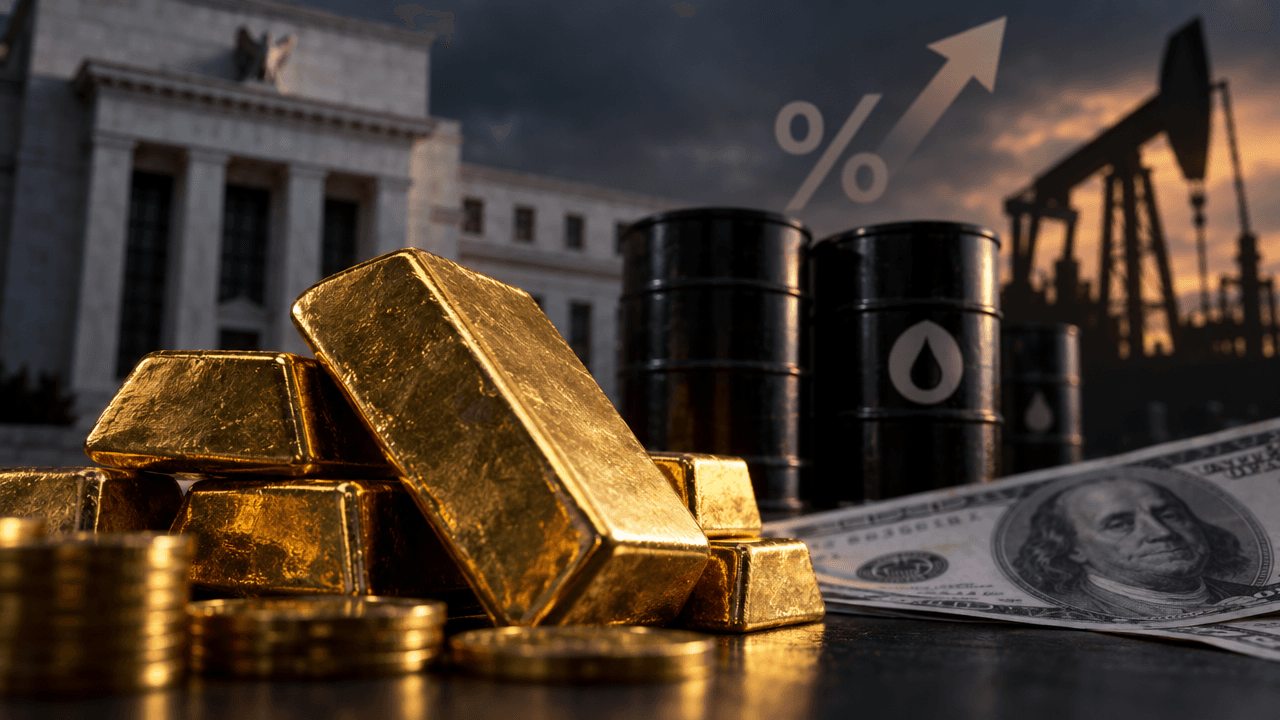
Gold fell sharply as a stronger U.S. dollar, rising Treasury yields and increasing expectations of further interest-rate hikes combined to weaken demand for bullion. Spot gold touched a seven-week low near $4,156.45 per ounce, while U.S. gold futures for December delivery declined 3.1% to approximately $4,188.80. [2]
The decline highlights an important feature of gold markets: although the metal is often viewed as protection against inflation and uncertainty, it can struggle when inflation fears cause investors to expect tighter monetary policy. In this case, higher oil prices intensified concerns that inflation could remain elevated, reinforcing the prospect of interest rates staying higher for longer.
Why Gold Is Under Pressure
Gold does not pay interest or dividends. Its appeal depends largely on price appreciation, portfolio diversification, currency protection and its role as a safe-haven asset. When bond yields rise, investors can earn more income from government securities while holding an asset with comparatively lower risk.
That creates an opportunity cost for gold ownership. If a two-year or 10-year Treasury offers a more attractive yield, some investors may reduce exposure to bullion and move capital into interest-bearing assets. UBS analyst Giovanni Staunovo described higher oil prices and increased expectations of additional U.S. rate hikes as the main drivers of gold’s recent weakness. [2]
The effect is particularly important when inflation-adjusted, or real, yields rise. Gold may retain value during inflation, but rising real yields make it less attractive because investors are being compensated more generously for holding cash and bonds.
THE DOLLAR’S ROLE
Gold is priced internationally in U.S. dollars. When the dollar strengthens, bullion becomes more expensive for buyers using other currencies. That can reduce demand from overseas investors, even if the dollar price of gold has not changed dramatically in the United States.
A stronger dollar also reflects broader market expectations. Investors often buy the currency when they anticipate higher U.S. interest rates, stronger relative economic performance or increased demand for liquid assets. These same expectations can pressure gold from two directions: the currency makes bullion more expensive internationally, while higher yields make non-yielding assets less competitive.
The relationship is not permanent or perfectly consistent. Gold can rise alongside the dollar during severe geopolitical stress, financial instability or concerns about the long-term purchasing power of fiat currencies. However, during the latest move, monetary-policy expectations appeared to dominate safe-haven demand.
Oil, Inflation And Rate Expectations
Higher oil prices were a central part of the market narrative. Energy costs influence transportation, manufacturing and household expenses, so a sustained oil rally can make investors worry that inflation will prove more persistent.
That concern matters because central banks may respond to persistent inflation by keeping interest rates elevated or raising them further. Oil prices climbed about 3% to a five-month high after attacks in Saudi Arabia raised concerns about disruption to energy supplies, according to market reporting. [6]
Gold’s recent decline shows why inflation is not automatically bullish for precious metals. If inflation rises while interest rates remain low, gold can benefit because investors seek protection against eroding purchasing power. But if inflation pushes central banks toward tighter policy, yields and the dollar may rise enough to outweigh the inflation-hedge argument.
For traders, the key question is not simply whether prices are rising. It is whether inflation is rising faster than interest rates and how markets expect policymakers to respond.
What Traders Should Watch Next
The Federal Reserve’s policy signals will remain central to gold’s direction. Traders will monitor the wording of policy statements, officials’ forecasts and incoming data on inflation, employment and economic growth. Market-based estimates of future rate decisions can shift quickly when new data changes expectations.
Treasury yields and the U.S. Dollar Index are also important technical and macroeconomic indicators. A continued climb in yields and the dollar could keep pressure on gold, particularly if the metal fails to reclaim recently broken support levels. Conversely, a decline in yields or a softer dollar could encourage a rebound as the opportunity cost of holding bullion falls.
Oil prices deserve close attention as well. A further energy rally could reinforce rate-hike expectations, while a sharp retreat might ease inflation concerns and reduce pressure on central banks. Traders should also distinguish between temporary volatility and a lasting change in trend.
Risk management is especially important after a large one-day decline. Rather than assuming that a sharp fall must immediately reverse, traders can wait for confirmation through price structure, volume, momentum and changes in yields. Position sizing, predefined stop levels and awareness of scheduled economic events can help limit impulsive decisions.
Practical Takeaways
The recent move offers several useful lessons. First, gold is sensitive to real yields, not just headline inflation. Second, the dollar can amplify moves in either direction because it affects international purchasing power. Third, oil-driven inflation can be bearish for gold when it strengthens expectations of tighter monetary policy.
For SimFi traders, this environment provides a valuable opportunity to study cross-market relationships without relying on a single indicator. Track gold alongside Treasury yields, the dollar, crude oil and interest-rate expectations. Look for confirmation across markets before taking a directional position, and test how different economic scenarios affect volatility.
Gold’s decline is not necessarily a verdict on its long-term value. It is a reminder that market prices reflect opportunity cost and expectations as much as current economic conditions. Until yields and the dollar lose momentum, bullion may remain vulnerable. But if inflation cools, oil retreats or policymakers signal a less aggressive path, the same forces could quickly begin supporting gold again.