
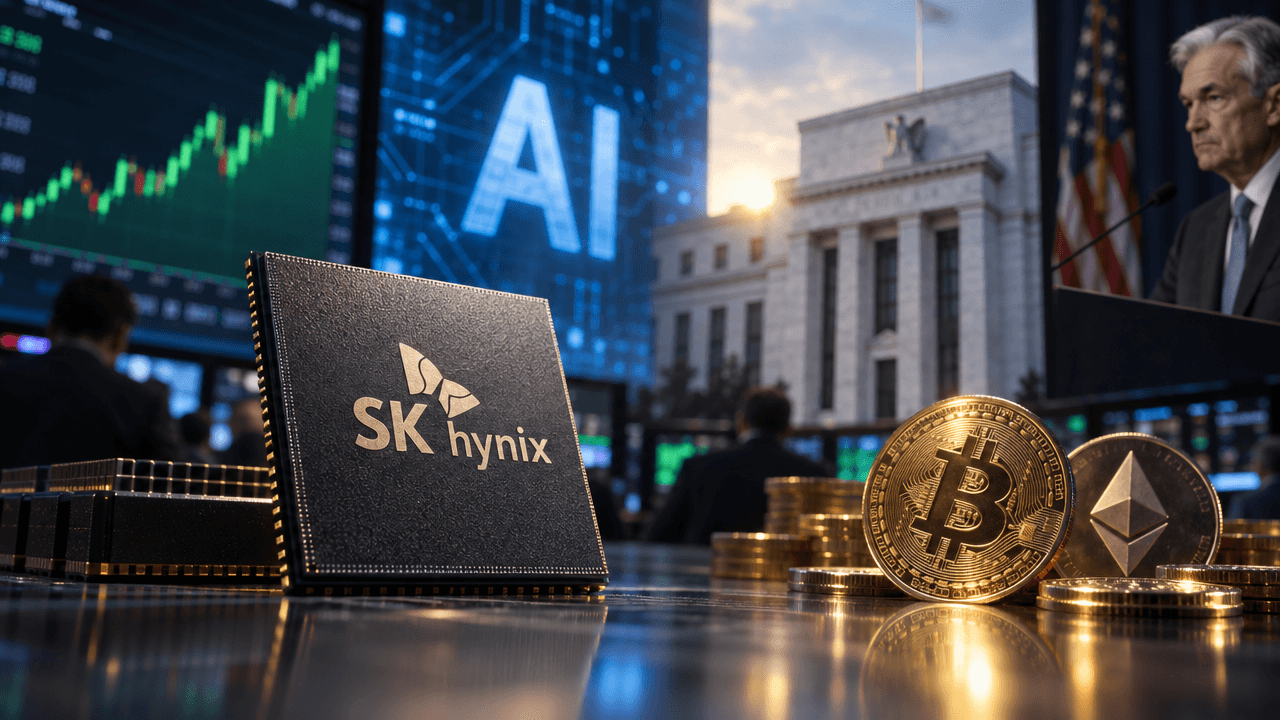
A powerful technology-stock rally is reshaping market sentiment after SK Hynix delivered record quarterly results and offered an upbeat outlook for artificial-intelligence infrastructure. The South Korean memory-chip maker’s performance helped lift semiconductor shares across Asia, pushed equity futures higher and encouraged investors to rotate back into risk-sensitive assets, including cryptocurrencies. Nasdaq futures rose as traders interpreted the results as evidence that demand for AI hardware remains durable. [8]
The Earnings Catalyst
SK Hynix sits at the center of the AI supply chain because its high-bandwidth memory, or HBM, chips help power advanced data centers and machine-learning systems. The company reported a more than sevenfold increase in quarterly operating profit, while revenue reached a record level. Its shares surged in Seoul, and other chipmakers, including Micron Technology and Samsung Electronics, moved higher in sympathy. [8]
The results matter beyond one company. Memory chips are a cyclical industry, meaning prices and profits can rise quickly when demand accelerates and fall sharply when inventories build. SK Hynix’s figures suggest that the current cycle is being supported by structural spending on AI servers rather than only by a temporary rebound in consumer electronics.
The company also announced a substantial shareholder-return program and indicated that AI-related memory demand could keep supplies tight for years. That message gave investors a reason to reconsider concerns that AI spending had already become excessive. Strong results do not eliminate valuation risk, but they can extend a rally by demonstrating that earnings are beginning to catch up with elevated expectations. [1]
Why Equity Futures Responded
Equity futures react not only to earnings but also to what earnings imply for an entire sector. A strong result from a key memory supplier can improve expectations for chip designers, semiconductor equipment manufacturers, cloud providers and technology platforms investing heavily in data centers.
That is why the market response spread beyond SK Hynix. Nasdaq futures advanced, while S&P 500 futures also edged higher as traders anticipated stronger results from major U.S. technology companies. The Nasdaq 100 appeared positioned for another day of gains, supported by renewed enthusiasm for the AI trade. [14]
For investors, the important distinction is between a company-specific surprise and a broader earnings signal. SK Hynix’s results represent both. The company benefited directly from powerful memory demand, but its outlook also suggests that the capital expenditure plans of large technology companies may continue supporting the semiconductor ecosystem.
The next test will be whether major cloud and software companies confirm that spending plans remain intact. If hyperscalers continue increasing purchases of servers, networking equipment and advanced chips, the rally could broaden. If they signal slower investment, markets may quickly question whether semiconductor valuations have moved too far ahead of fundamentals.
Cryptocurrencies Join The Risk-on Move
Cryptocurrencies also benefited from the improvement in risk appetite. Bitcoin and Ether moved higher as investors became more willing to hold assets that typically perform better when confidence is rising and liquidity conditions are supportive. Bitcoin was reported near $81,400, while Ether traded around $2,366 during the session. [14]
The relationship between technology shares and digital assets is not mechanical, but both can respond to similar forces. Falling real yields, expectations for easier monetary policy and enthusiasm for innovation can encourage investors to increase exposure to growth-oriented assets. Conversely, rising yields or a sudden reduction in liquidity can pressure both technology stocks and cryptocurrencies at the same time.
This correlation is useful for market analysis but dangerous for risk management. A trader should not assume that a tech rally guarantees continued cryptocurrency gains. Digital assets can be significantly more volatile, and a modest change in interest-rate expectations may produce a much larger price move.
The Fed Remains The Main Market Test
The rally is arriving ahead of a Federal Reserve interest-rate decision, making monetary policy the most important near-term risk. Technology companies are often valued on expected future cash flows. When interest rates fall, those future cash flows become more attractive in present-value terms. When rates rise, valuations can come under pressure, particularly among companies whose profits are expected further in the future.
A Fed statement that suggests fewer rate cuts, tighter policy or concern about persistent inflation could reverse part of the enthusiasm created by SK Hynix. Even excellent corporate earnings may struggle to support prices if bond yields rise sharply and investors reduce exposure to risk assets.
This creates a two-part test for the market. First, technology companies must deliver earnings and guidance strong enough to justify current valuations. Second, monetary policy must remain supportive enough to prevent higher discount rates from overwhelming those earnings.
Practical Takeaways For Traders
Traders should monitor semiconductor breadth rather than focusing on one headline stock. A healthier rally includes participation from chip manufacturers, equipment suppliers, cloud companies and broader technology indexes.
They should also compare price gains with earnings revisions. If share prices rise while analysts continue reducing profit forecasts, the move may be driven more by sentiment than fundamentals. If estimates rise alongside prices, the rally has stronger support.
Position sizing is equally important. The combination of AI enthusiasm, concentrated technology leadership and an upcoming Fed decision creates a market capable of moving quickly in either direction. Using predefined exit levels, avoiding excessive leverage and waiting for confirmation after major announcements can help manage event risk.
The SK Hynix surge has reminded investors that the AI investment cycle still has considerable momentum. Yet the rally is not self-sustaining. Future gains will depend on whether demand remains strong, corporate spending continues and the Federal Reserve avoids delivering a policy shock. For now, the message is constructive: robust chip earnings can lift futures and revive broader risk appetite. The more difficult question is whether the market can convert that optimism into durable, diversified performance.